
Oulu — European Capital of Culture 2026: Autumn Events, Arctic Cuisine and a 3-Day Route
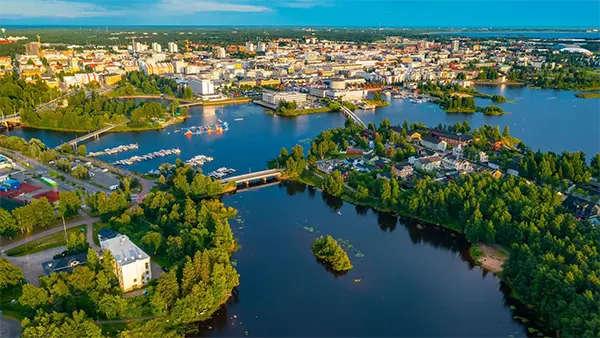
Oulu has a particularly strong reason to be on a northern European itinerary in autumn 2026. The Finnish city shares the European Capital of Culture title with Trenčín in Slovakia, while Oulu’s programme extends far beyond the city itself through cooperation with 39 other municipalities in northern Finland. By September, the bright summer nights are giving way to longer evenings, autumn colours and the first real sense of the northern dark season, which suits a cultural programme built around contrasts between nature, light, sound and technology. Travellers arriving between September and November can combine major Oulu2026 events with a compact city centre, the wooden houses of Pikisaari, the Bothnian Bay shore at Nallikari and a food scene increasingly focused on northern ingredients. Three days are enough for a well-paced first visit, provided the dates are matched carefully with the autumn programme.
Why Autumn 2026 Is One of the Most Interesting Times to Visit Oulu
The European Capital of Culture year has changed the scale of Oulu’s cultural calendar without turning the city into a place that requires complicated sightseeing plans. Many important venues remain within walking or cycling distance of the centre, and several Oulu2026 works have been designed specifically for unusual urban settings. The year-long programme includes photography, media art, public works and installations alongside temporary festivals. PLAY, created with Fotografiska Tallinn, runs throughout 2026, while Earworm — Media Art from Kiasma and Layers in the Peace Machine bring contemporary media works to Oulu City Hall. This means a three-day visitor does not have to depend entirely on a single festival date: there is still substantial cultural content between the headline events.
Autumn gives this programme a different character from the opening celebrations and summer festivals. Longer evenings allow light installations to work in their intended setting, while the coastal weather and changing foliage make the relationship between art and northern nature easier to understand. One of the clearest examples is The Kuutar Garden, running from 18 September until 30 November 2026. Danish artist Jakob Kudsk Steensen has transformed part of the Kivisydän underground car park into an immersive environment influenced by the University of Oulu Botanical Garden, endangered plants and years of ecological fieldwork in northern Finland. It is an unusual use of a space that most visitors would normally regard simply as city infrastructure.
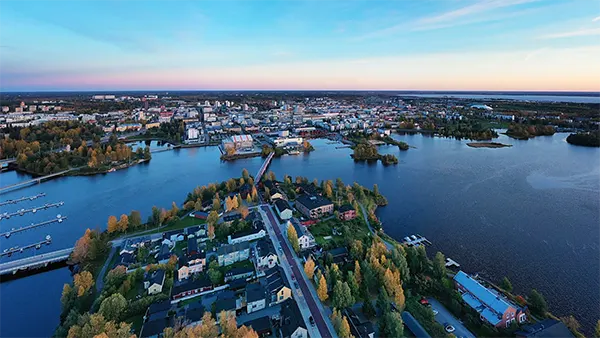
The city also remains manageable despite the larger cultural calendar. Oulu Market Square, the Market Hall, Rotuaari pedestrian area, Oulu Cathedral, the Hupisaaret islands and Pikisaari can all be combined into a largely walkable central route. Nallikari requires a slightly longer journey but remains close enough for a half-day trip. This compact geography matters in autumn, when changing weather can make an overfilled itinerary tiring. A sensible visit alternates indoor exhibitions with neighbourhood walks and meals rather than trying to cover the entire Oulu2026 region. Visitors travelling after 9 October gain another major indoor option with the opening of the renovated and expanded Tiima Museum and Science Centre.
September, October and November Events Worth Planning Around
September has one of the strongest concentrations of events. Hurmos runs from 9 to 11 September, followed by the opening of The Kuutar Garden on 18 September. The busiest period comes from 23 to 27 September. Arctic Tasting takes place from 23 to 26 September, while The Irish Festival of Oulu runs from 23 to 27 September. Its programme includes Irish music, storytelling, dance, workshops, film and street performance. Cultural Kaleidoscopes takes over the city centre on 25 and 26 September with a free programme combining Irish and Finnish traditions. One of its most visible productions is Planète Vapeur’s Pegasus, The Song of the Stars, performed on Kirkkokatu from 19:30 to 20:30 on both evenings. The illuminated large-scale street production combines live music, opera, aerial work, circus and theatre.
October shifts the focus towards nature, museums and the darker side of northern cultural identity. The European Owl Festival is scheduled for 2–4 October in Liminka, south of Oulu, with the Liminganlahti Nature Centre as its main venue. It is a useful choice for visitors interested in birdlife, photography and the wetlands of the Bothnian Bay rather than city events alone. Back in Oulu, 9 October is an important date because Tiima Museum and Science Centre opens to the public. The new centre combines Tietomaa Science Centre, Oulu Museum, a children’s museum and the immersive VISIO space. The Metallikausi exhibition also examines the northern Finnish metal scene and the cultural conditions in which internationally recognised bands emerged.
November is the strongest period for travellers who want the full combination of darkness, light art and indoor performance. TAR, an experimental sound festival, runs from 11 to 15 November, while Lumo Art & Tech takes place from 13 to 22 November. The expanded festival uses light, digital work, sound and technology at locations around Oulu and develops the city’s established Lumo Light Festival on a larger scale for the Capital of Culture year. From 19 to 21 November, Beyond the Sky combines astrophotography by Jukka-Pekka Metsävainio with music by composer Lauri Porra and Oulu Sinfonia. Visitors choosing November should therefore reserve evening time rather than treating the darker hours as the end of the sightseeing day.
Arctic Cuisine in Oulu: What Northern Food Means in Practice
Oulu2026 treats food as part of local culture rather than simply an extra service for visitors. Arctic Food Lab connects restaurants, cafés, producers and food professionals across the region and places particular emphasis on ingredients associated with northern forests, farmland and waters. In practical terms, this can mean freshwater and Bothnian Bay fish, berries, mushrooms, potatoes, root vegetables, herbs, reindeer and locally produced meat, as well as rye, barley and other grains. Modern chefs do not necessarily serve these ingredients in old-fashioned dishes. A meal may combine a traditional northern raw material with contemporary Nordic cooking or influences from Italy, France and other European food cultures.
For a direct introduction to older Oulu food traditions, the Market Square and Market Hall are sensible starting points. Oulu Market Hall has served customers since 1901 and remains a place to buy local produce, eat and take a break from autumn weather. Salmon soup is an accessible choice, while rössypottu is considerably more regional. This Oulu speciality is a substantial soup or stew traditionally made with blood pudding, potatoes, pork and root vegetables. The Market Hall café serves rössypottu on selected days, including Tuesdays and Thursdays according to Visit Oulu’s current visitor information. It is also found at Sokeri-Jussin Kievari in Pikisaari, a restaurant located in a timber building and known for Finnish cooking based on domestic and seasonal ingredients.
Travellers who prefer contemporary northern cooking have several alternatives. Oula Kitchen & Bar at Lapland Hotels Oulu uses northern flavours for breakfast and dinner and belongs to the Arctic Food Lab network. Sokeri-Jussin Kievari, Mallassauna, Lasaretti, Restaurant Nallikari and several other local businesses are also associated with Arctic Food Lab. The point is not to eat reindeer at every meal. Fish, wild berries, mushrooms, herbs and locally grown vegetables can provide a broader picture of the region. Oulu also has its own informal food identity: locals use the word känkky for Oulu-style pizza, illustrating how everyday city food exists alongside carefully prepared northern tasting menus.
Arctic Tasting 2026 and Specific Dishes to Look For
Visitors travelling from 23 to 26 September have an unusually easy way to sample several restaurants without ordering full meals at each one. Arctic Tasting 2026 involves 23 restaurants and cafés in the Oulu region, with special portions priced at €5 or €7. The 2026 menu is already highly specific. Oula Kitchen & Bar is serving malt bread with cold-smoked pike mousse, Restaurant Nallikari has a nettle sourdough blini with charred Bothnian Bay vendace, vendace mousse and roe, and Tuba is offering local fish and chips made with Bothnian Bay whitefish. Ravintola Kummeli has smoked reindeer flatbread with pickled chanterelles and lingonberries, while Ravintola Pekuri combines a salmon patty with chanterelle beurre blanc and parsnip-potato purée.
The sweet dishes show another side of the northern ingredient list. The Arctic Tasting selection includes cloudberry tiramisu made with cloudberry jam, birch water and wild cloudberry powder, a croissant with Finnish bilberry confit, nettle crêpes with spruce-tip syrup and desserts based on berries, oats and dairy products. These combinations are useful examples of how contemporary Oulu cuisine works: regional ingredients remain recognisable, but chefs place them in formats that international visitors already understand. The event is also customer-rated, so diners can score what they try. Because individual tasting portions are small, two people can reasonably sample several dishes over lunch and dinner without turning the entire day into one long restaurant booking.
Outside the Arctic Tasting dates, the same approach can be recreated independently. Start with breakfast or salmon soup around the Market Hall, have lunch in the centre, then reserve a northern-focused dinner in Pikisaari or close to the cathedral. Travellers staying three nights can dedicate one dinner to traditional Finnish cooking and another to a modern Arctic Food Lab restaurant. Autumn is particularly suitable for menus using mushrooms, berries and root vegetables, although menus change with supply and season. Current opening times and menus should always be checked before arrival, especially on Sundays and around major events, when popular central restaurants may fill earlier than on an ordinary autumn weekend.
A Practical 3-Day Route Through Oulu
Day one should concentrate on the historic centre and river estuary rather than immediately travelling farther out. Begin at Oulu Market Square and the Market Hall, see the Toripolliisi statue and continue through the central streets towards Rotuaari. From there, include Oulu Cathedral and the Hupisaaret islands, whose streams, paths and small bridges create a surprisingly green area close to the centre. Later, cross towards Pikisaari. The island preserves wooden residential and industrial buildings from several periods and has a long connection with shipbuilding, tar production and craft industries. Today it is also associated with artists, restaurants and small creative businesses. Finish the day with dinner in Pikisaari; Sokeri-Jussin Kievari is particularly suitable for traditional Finnish food, while Mallassauna offers a more informal combination of local brewing, food and sauna culture.
Day two can combine Oulu2026 art with the coast. Begin with a pre-booked visit to the City Hall exhibitions Earworm — Media Art from Kiasma and Layers in the Peace Machine, or choose PLAY if photography is a higher priority. From 18 September onwards, add The Kuutar Garden at Kivisydän; the installation is open into the evening and therefore does not need to take the best daylight hours. After lunch, travel to Nallikari on the Bothnian Bay. The sandy shore, lighthouse, walking routes and open sea views present a completely different side of Oulu from the compact centre. Autumn is not beach season in the conventional sense, but Nallikari is still worthwhile for a coastal walk and sunset. Restaurant Nallikari provides an option for dinner before returning to the centre.
Day three should be adjusted to the exact travel date. In late September, leave the afternoon and evening free for Arctic Tasting, The Irish Festival of Oulu and Cultural Kaleidoscopes rather than adding another museum. From 9 October onwards, Tiima Museum and Science Centre can occupy a substantial part of the day before an evening meal or performance. During 13–22 November, structure the day around Lumo Art & Tech and allow the evening installations to be the main event. Visitors arriving from 19 to 21 November can combine Lumo with Beyond the Sky if tickets and timings allow. When there is no major event on the chosen date, the third day can be used for Nallikari if it was skipped earlier, additional Oulu2026 exhibitions, a longer cycling route or a half-day excursion into the surrounding region.
Transport, Autumn Conditions and Booking the Trip Efficiently
Oulu is straightforward to reach without a car. The airport has air connections including services via Helsinki, while trains and long-distance buses connect Oulu with other Finnish cities. The railway and coach stations are close to the centre, which makes centrally located accommodation particularly convenient for a three-day trip. Within Oulu, walking works well for the Market Square, Rotuaari, City Hall, the cathedral, Hupisaaret and Pikisaari. Local buses are useful for longer trips, while cycling remains an important part of everyday transport in Oulu. The city has more than 900 kilometres of cycleways, so renting a bicycle can save time when travelling between the centre, Pikisaari and the coastal districts if the weather is suitable.
Autumn conditions require more flexibility than a summer visit. September can still provide mild days, but wind from the Bothnian Bay, rain and rapidly cooling evenings make layered clothing and a waterproof outer layer sensible. By November, daylight is much shorter and temperatures can fall below freezing, so gloves, warm footwear and an insulated coat become more important. The darker evenings are not necessarily a disadvantage: events such as Lumo are designed around them. A good daily rhythm is therefore to use daylight for neighbourhoods, parks and Nallikari, then move towards museums, restaurants and cultural events later in the day.
Book the fixed elements first and leave the walking sections flexible. Tickets for major performances such as Beyond the Sky should take priority, followed by timed exhibitions and any restaurant that is essential to the food itinerary. The Kuutar Garden runs from 18 September to 30 November, so it is easier to fit around other plans than a one-night performance. City Hall exhibitions may use timed entry even when admission is free. For September visits, check the individual Arctic Tasting opening times because participating restaurants follow their own schedules. With those fixed points secured, the remaining route can be rearranged around weather. That approach gives three days enough structure to include Oulu2026, northern food, historic neighbourhoods and the Bothnian Bay without turning a short city break into a rushed checklist.