
Skagen, Denmark 2026: The New Maskinrummet Centre, Maritime Heritage and a Northern Coastal Route
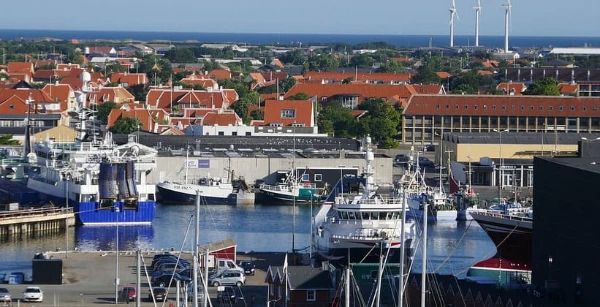
At Denmark’s northernmost tip, Skagen brings together working fishing harbours, historic lighthouses, windswept dunes and the remarkable meeting point of two seas. In 2026, the town gained another major attraction when the new Maskinrummet experience centre opened on 27 June, adding an extensive collection of historic engines, classic vehicles and maritime objects to its cultural attractions. Visitors can now combine the centre with Skagen’s fishing history, the famous artists’ quarter and a coastal journey towards Grenen, where the Skagerrak and Kattegat meet. This guide covers what makes Maskinrummet worth visiting, where to learn about the town’s maritime past and how to organise a practical route along northern Denmark’s distinctive coastline.
Maskinrummet: Skagen’s Major New Visitor Attraction in 2026
Oplevelsescenter Maskinrummet officially welcomed visitors on 27 June 2026 after approximately three years of construction at Skagen Harbour. Located at Auktionsvej 2, the centre was established by former fishing skipper and businessman Henning Kjeldsen, whose extensive private collection forms the basis of its exhibitions. The complex occupies more than 10,000 square metres, bringing together industrial machinery, historic transport, maritime equipment and other collections. Although its name translates as the Engine Room, Maskinrummet is considerably broader than a conventional engine museum. Its exhibitions are arranged across several floors and buildings, with restaurants and family facilities creating opportunities for a longer visit.
The mechanical collection is the main reason to visit. More than 400 engines from different countries illustrate how machinery developed during the industrial age and supported transport, manufacturing and maritime industries. One particularly important exhibit is a 70-tonne Krupp diesel generator dating from 1926, which supplied electricity during the 1936 Berlin Olympic Games. Unlike museums where machinery remains permanently silent, Maskinrummet has facilities for starting selected engines, allowing visitors to hear their distinctive sounds and observe the movement of large mechanical components. Demonstrations are not guaranteed throughout the day, however, so anyone particularly interested in seeing an engine operating should enquire about the programme before arrival.
Beyond the engines, visitors will find more than 100 classic cars, alongside extensive motorcycle and moped collections. The exhibits range from early motor vehicles to celebrated designs such as the Mercedes-Benz 300 SL Gullwing. Historic advertising signs and transport-related objects add context to the displays. A separate fashion collection contains vintage clothing, luggage and accessories associated with internationally recognised designers, providing a contrast to the industrial galleries. Families can use the dedicated children’s area, while the centre’s restaurants offer opportunities for a meal without leaving the harbour district. As the attraction continues to develop, the available exhibitions and activities may change, making its official visitor information useful when planning a trip.
Tickets, Opening Hours and Practical Advice for Maskinrummet
As published in its 2026 visitor information, Maskinrummet opens daily from 10.00 am to 5.00 pm, including weekends. It operates throughout the year, apart from 24, 25 and 31 December and 1 January. Standard admission costs DKK 150 for visitors aged 12 and over, while children under 12 enter free when accompanied by a paying adult. A two-day ticket is available for DKK 250, which may suit travellers who want to examine the collections without rushing. The centre accepts major payment cards and MobilePay, and parking spaces are available nearby under the local parking arrangements. Visitors should confirm prices and any temporary changes at maskinrummet-skagen.dk before travelling.
Allow approximately two to three hours for the main exhibitions, although enthusiasts interested in historic engines or vintage vehicles may prefer a longer visit. The size of the collection makes it sensible to follow the centre’s recommended route rather than moving randomly between galleries. Visitors with limited mobility should check which exhibition areas are accessible, particularly when planning to visit several floors. Pets are not permitted inside, and organised guided visits can be arranged for those who would like additional historical information. The centre’s own lighthouse is currently not open for public access, although it can be viewed from outside. It should not be confused with the historic Grey Lighthouse near Grenen, which is a separate attraction.
Maskinrummet is particularly convenient for visitors staying in central Skagen because it stands directly within the harbour district. Its location makes it possible to combine the exhibitions with a walk among fishing vessels, quayside buildings and nearby restaurants. Travellers arriving without a car can make the harbour their starting point before exploring the town on foot or hiring a bicycle for the coastal sections. A practical approach is to visit Maskinrummet during the late morning, have lunch near the waterfront and continue towards Skagen’s historical attractions afterwards. This also provides flexibility during periods of unsettled weather, when the indoor exhibitions can replace a planned beach excursion.
Skagen’s Maritime Heritage: Fishing, Rescue Services and Coastal Life
Skagen’s relationship with the sea extends far beyond its modern tourism industry. Situated between the Skagerrak and Kattegat, the settlement developed around fishing, navigation and the demanding conditions of northern Denmark’s coastline. Shifting sandbanks, strong winds and unpredictable waters made sailing hazardous, while fishing communities depended on their ability to work in difficult weather. The expansion of the fishing industry eventually transformed Skagen into an important commercial harbour. Today, fishing vessels, harbour facilities and seafood businesses remain central to the town’s identity. Walking around the waterfront offers a useful contrast between working maritime activity and the historical equipment preserved inside Maskinrummet.
For a closer understanding of everyday coastal life, Kystmuseet Skagen, the Coastal Museum of Skagen, is an important stop. Located at P.K. Nielsens Vej 10, this open-air and exhibition museum presents reconstructed houses representing three periods of local building history. The Black Period extends to approximately 1875, the Yellow Period covers roughly 1875 to 1907, and the Red Period begins after 1907. These buildings illustrate how living conditions, construction methods and household arrangements changed as Skagen developed. They also reveal substantial differences between prosperous fishing families and poorer residents whose livelihoods depended on uncertain catches and seasonal work.
The museum’s maritime exhibitions cover fishing, shipping and the coastal rescue service, with particular attention to the dangers faced by people working at sea. Historic lifeboats, rescue equipment and personal stories help explain the importance of organised rescue efforts along the exposed coast. Visitors can also learn about traditional crafts and the practical skills needed to maintain boats and fishing equipment. The museum has a family activity area, a café and displays with English-language information in many sections. Its published opening hours are generally shorter than those of Maskinrummet, so it is worth checking the current schedule before arranging both visits on the same day.
Historic Lighthouses, Skagen Painters and the Changing Coastal Landscape
Skagen’s lighthouses provide visible evidence of the town’s long struggle to make navigation safer. The old Vippefyret, first established in 1627, used a distinctive mechanism that raised a burning fire basket as a warning to passing ships. The surviving structure is a reconstruction, but it helps explain how sailors were guided before modern lighthouse technology became available. Nearby coastal landmarks include the White Lighthouse, dating from 1747, and Det Grå Fyr, the Grey Lighthouse, completed in 1858. At approximately 46 metres high, the Grey Lighthouse remains one of Denmark’s most recognisable historic navigational structures. Today, the site also offers exhibitions connected with migratory birds and opportunities to view the surrounding landscape from above when tower access is available.
Maritime life also influenced Skagen’s internationally recognised artistic heritage. During the late nineteenth century, painters including Michael Ancher, Anna Ancher and Peder Severin Krøyer gathered in the town, attracted by its distinctive northern light and fishing community. Their paintings documented working fishermen, family life, beaches and the dramatic relationship between people and the sea. Skagens Museum preserves a major collection of their work, making it a valuable addition to an itinerary focused on coastal history. Visitors can compare the fishing boats and daily routines represented in these paintings with the historical objects displayed at Kystmuseet and the modern activity around Skagen Harbour.
The surrounding dunes tell another important chapter of local history. Windblown sand repeatedly affected roads, farmland and settlements, forcing residents to adapt to a changing landscape. One of the clearest examples is Den Tilsandede Kirke, the Sand-Covered Church, whose surviving tower stands among trees and dunes south-west of Skagen. The church was abandoned for regular worship in the late eighteenth century as drifting sand made access increasingly difficult. Farther south, Råbjerg Mile remains one of northern Europe’s remarkable migrating dune landscapes. These sites help explain why Skagen’s maritime history cannot be separated from the geography of the peninsula: the same forces that shaped navigation and fishing also influenced where people could build, travel and live.
A Coastal Route from Skagen Harbour to Grenen and the Northern Beaches
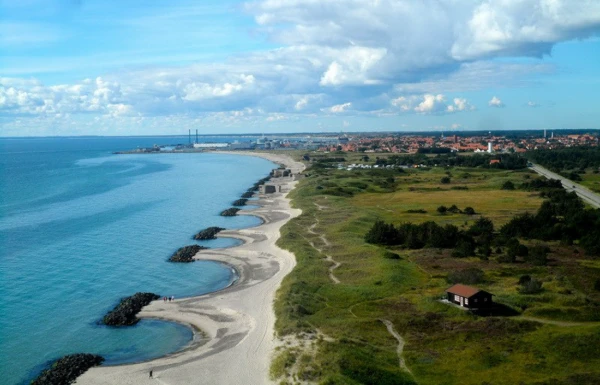
A useful coastal itinerary begins at Skagen Harbour, where Maskinrummet and the working waterfront provide an introduction to the town. From there, visitors can continue through central Skagen towards the historic eastern district of Østerby and the Vippefyret lighthouse site. The route passes characteristic yellow-painted houses with red-tiled roofs, small streets and coastal views that have become closely associated with the town’s appearance. Continuing north-east along Fyrvej leads towards the White Lighthouse and then Det Grå Fyr. The distance from central Skagen to the Grey Lighthouse is manageable on a bicycle, while walkers should allow additional time for sightseeing stops and changes in weather.
From Det Grå Fyr, the route continues towards Grenen, the sandy northern extremity of the Skagen peninsula. This is where the waters of the Skagerrak and Kattegat meet, often producing visible opposing wave patterns along the shore. The exact position and appearance of the sandy point change naturally with currents and sediment movement. Visitors should not enter the water at the meeting point because strong currents can make swimming dangerous, even when the sea appears relatively calm. The safest experience is to remain on the beach, watch the moving water and take photographs from a secure position. Seals are sometimes visible resting along the coast, but they should be observed from a distance without approaching or disturbing them.
Several marked Grenensporet walking routes provide alternatives for different fitness levels and interests. The Yellow Route covers approximately 3 kilometres and leads from the Grenen car park towards the meeting point of the seas, passing a former radar bunker viewpoint and the grave of poet Holger Drachmann. The Green Route is approximately 2.9 kilometres long and follows a relatively accessible gravel surface, making it suitable for many families with pushchairs and visitors using mobility aids. The Blue Route covers about 2.8 kilometres and incorporates natural and historical features, including coastal rescue heritage and lighthouse surroundings. For a longer excursion, the Red Route extends approximately 9.7 kilometres and links several of the peninsula’s important lighthouse and coastal landmarks.
Extending the Journey to Old Skagen, Råbjerg Mile and the West Coast
After visiting Grenen, travellers with additional time can explore the western side of the peninsula around Højen, commonly called Old Skagen or Gammel Skagen. This area is known for its coastal houses, beach landscapes and sunset views over the Skagerrak. Unlike the more exposed meeting point at Grenen, the western beaches are often chosen for a relaxed walk at the end of the day. The area also contains historic seaside hotels and traditional summer residences associated with Denmark’s long-established holiday culture. Cycling is a convenient way to reach Old Skagen from the town centre, although wind direction can make the return journey more demanding than expected. Travellers should use marked paths where available and respect protected dune vegetation.
For a fuller day exploring northern Jutland, continue south towards Råbjerg Mile, situated roughly 15 kilometres from central Skagen by road. This enormous moving dune covers approximately one square kilometre and reaches heights of around 40 metres, creating an unusually open landscape of sand ridges and hollows. The dune gradually migrates eastwards under the influence of prevailing winds, making it an important example of the natural processes that have shaped the peninsula. Walking across the sand is physically more demanding than following a paved coastal path, particularly in strong winds or hot weather. Visitors should carry drinking water, wear suitable footwear and avoid unstable wet sand or areas where the ground appears unsafe.
Two days provide a comfortable introduction to Skagen without requiring an overly ambitious schedule. The first day can focus on Maskinrummet, the harbour, Kystmuseet and Skagens Museum, leaving time for a seafood meal or an evening walk through the historic streets. The second day can be dedicated to the lighthouse route, Grenen and the western beaches, with Råbjerg Mile included when transport and weather conditions permit. Skagen is accessible by train through Frederikshavn, while travelling by car makes the more distant dune attractions easier to reach. Summer offers longer daylight hours and a broader choice of seasonal activities, but spring and autumn can be quieter and particularly rewarding for coastal walking and birdwatching. With its newly opened Maskinrummet centre, established maritime museums and varied coastal scenery, Skagen offers a journey that connects the working history of northern Denmark with the natural forces that continue to shape its shores.