
Budapest in 2026: Thermal Baths, Buda Castle and the Danube
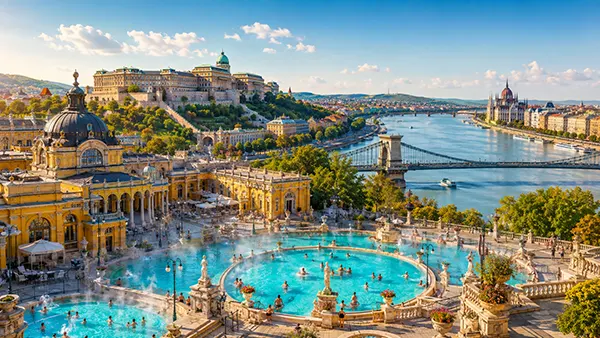
Budapest remains one of the most rewarding European capitals for travellers who prefer a city break built around history, water and walkable neighbourhoods. In 2026, its essential character is still shaped by the thermal baths, the palace quarter above Buda and the broad Danube separating Buda from Pest. There are also important changes to consider: Gellért Thermal Bath is closed for a major renovation, work continues in parts of the Buda Castle Palace District, and popular baths can become crowded well before midday. A well-planned visit should therefore combine advance booking with enough free time for riverside walks, museum visits and unhurried meals.
Budapest’s Thermal Baths in 2026
Thermal bathing in Budapest is not simply a tourist activity added to a sightseeing schedule. It is part of the city’s everyday culture, supported by hot springs that have been used in different forms since Roman and Ottoman times. Modern bath complexes usually combine warm thermal pools, cooler swimming pools, saunas, steam rooms and treatment areas, although the exact facilities vary. Visitors should not assume that every bath offers the same atmosphere. Széchenyi is large, lively and visually grand, Rudas preserves a strong Ottoman character, while Lukács generally feels more local and less ceremonial than the best-known city-centre names.
Széchenyi Thermal Bath in City Park is the most straightforward choice for a first visit. Its outdoor pools remain open throughout the year, so winter sessions can be especially memorable when steam rises above the water. In 2026, the standard schedule is 07:00-20:00 from Monday to Thursday, 07:00-22:00 on Friday and 08:00-20:00 at weekends, though special dates may differ. A daily ticket with locker use costs HUF 13,200 on Monday to Thursday, HUF 14,800 on Fridays and weekends, and HUF 15,800 during holidays and peak periods. Online fast-track tickets cost more but may reduce waiting at busy times.
One major change for 2026 is the closure of Gellért Thermal Bath. The historic Art Nouveau bath has been shut since 1 October 2025 and is expected to reopen in 2028 after extensive work. Travellers should not buy unofficial Gellért admission offers for dates during the closure. Rudas and Széchenyi are the clearest alternatives for visitors seeking a historic setting, while Lukács is useful for those who prefer a quieter visit and are considering a Budapest Card that includes admission. Demand has shifted towards the baths that remain open, so weekday mornings are generally more comfortable than Saturday afternoons.
Choosing a Bath and Planning the Visit
Rudas Thermal Bath is a strong option for travellers who want Ottoman architecture and views towards the Danube. Its oldest section centres on a domed Turkish bath, while the newer wellness area includes a rooftop pool overlooking the city. The timetable requires attention because the Turkish section has men-only, women-only and mixed sessions on different days and at different times. Friday and Saturday night bathing normally runs from 22:00 until 03:00, with tickets sold online. Children under 14 are not admitted, and the official information also states that the bath is currently not accessible to visitors with disabilities.
Practical preparation makes a substantial difference. Bring a swimsuit, waterproof sandals and a towel; a swimming cap is normally required only for dedicated swimming pools rather than thermal pools. Lockers are adequate for most visitors, while a private cabin gives more space for changing and storing belongings. Shower before entering the water, move gradually between pools of different temperatures and take regular breaks. Thermal water is not suitable for every medical condition, especially where heat exposure is restricted, so travellers with cardiovascular concerns, pregnancy-related questions or other health issues should seek professional medical advice before planning a long session.
Allow at least two or three hours for a bath visit rather than treating it as a quick photo stop. Early entry offers calmer pools and cleaner changing areas, while late afternoon can work well after museums close. Keep phones and cameras away from people who have not agreed to be photographed, and remember that these buildings still serve local residents and medical guests. Prices, maintenance closures and pool availability can change during the year, so check the bath’s own website shortly before arrival. Booking directly is safer than relying on resellers that may continue to display outdated information.
Buda Castle and the Historic Castle District
Buda Castle is best understood as a large historic district rather than a single building with one entrance ticket. The Royal Palace occupies the southern end of Castle Hill, while the surrounding quarter includes Matthias Church, Fisherman’s Bastion, residential streets, viewpoints, courtyards and museums. Together with the Danube banks and Andrássy Avenue, the area forms part of Budapest’s UNESCO World Heritage property. A visitor can spend several hours walking through the district without entering a museum, but the palace interiors and collections add useful context to the city’s medieval, Habsburg and twentieth-century history.
The Royal Palace now houses major cultural institutions, including the Hungarian National Gallery and the Budapest History Museum’s Castle Museum. Their opening times and ticket systems are separate, so it is worth choosing one in advance rather than attempting every collection in a single day. The National Gallery suits visitors interested in Hungarian painting and sculpture, while the Castle Museum gives a broader account of Budapest’s development and includes historic palace spaces. Temporary exhibitions may require additional tickets, and some rooms or routes can be affected by events, conservation work or changes linked to the ongoing reconstruction of the palace complex.
Restoration remains a visible part of the Buda Castle experience in 2026. The National Hauszmann Programme has already brought back or renovated sites such as St Stephen’s Hall, the Riding Hall, the Main Guard building, Csikós Court, fountains and garden areas. Work continues on major elements of the Royal Palace and other buildings around the palace quarter. This does not make Castle Hill unsuitable for a visit, but barriers, machinery and altered pedestrian routes should be expected in some sections. The programme has also created newly finished courtyards and terraces that offer different views of the Danube and Pest.
A Practical Route Through Castle Hill
A sensible route begins at Clark Ádám Square beside the Chain Bridge. From there, visitors can take the Buda Castle Funicular to Szent György Square or walk uphill through the Castle Garden area. The funicular operates daily from 08:00 to 22:00 under its standard 2026 schedule, usually departing every five to ten minutes, although maintenance takes place on certain Mondays. The ride lasts only a short time, so walking may be the better option for travellers who want views and do not mind a steady climb. Bus services also connect the district with central transport hubs.
From Szent György Square, walk through the palace courtyards before continuing north towards Dísz Square, Trinity Square and Matthias Church. Fisherman’s Bastion is close by and provides one of the clearest views across the Danube to the Hungarian Parliament. The open streets and terraces are generally most pleasant before organised groups arrive in the late morning. Sunset is attractive, but the busiest viewpoints can feel congested at that hour. Comfortable footwear is essential because the route includes slopes, steps and cobbled surfaces that become slippery in rain or winter frost.
Plan food and museum stops with the district’s pricing in mind. Restaurants on Castle Hill often charge more than neighbourhood venues away from the main sights, and popular terraces may require a reservation. A practical approach is to have coffee or lunch in the district, then walk down towards Batthyány Square, the Castle Garden Bazaar or the riverside for dinner. Travellers who use wheelchairs, pushchairs or have limited mobility should check lift and step-free routes before the visit, as historic gradients and temporary construction diversions can make some approaches difficult.
Experiencing Budapest Along the Danube
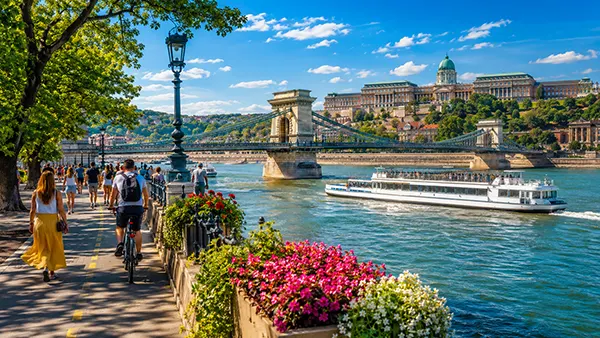
The Danube gives Budapest its clearest sense of scale. On the Pest side, the riverfront links the Parliament area, the Shoes on the Danube Bank memorial, the Chain Bridge, Vigadó Square and the central promenades. Across the water, Castle Hill, Fisherman’s Bastion and Gellért Hill form the main skyline. Walking both banks provides a fuller view than staying only in the commercial centre. Morning light often suits the Buda-facing panorama from Pest, while late afternoon and evening bring warmer light to Parliament when seen from Batthyány Square or the Buda embankment.
A sightseeing cruise is useful when time is limited because many major landmarks face the river. Most central trips last around one hour, with daytime and evening departures from piers near the inner city. Routes commonly pass Parliament, the Chain Bridge, Buda Castle and Gellért Hill, though the exact course can change with river conditions and operational rules. Evening cruises offer illuminated architecture, while daytime departures make details easier to see. Compare whether a ticket includes an audio guide, indoor seating, an open deck or drinks, and check the operator’s cancellation conditions before paying.
Public transport also provides inexpensive river views. Tram 2 runs along the Pest embankment near Parliament and central Danube landmarks, while tram 19 follows a scenic route on the Buda side. These services are useful for linking walks rather than replacing them entirely. Standard BKK tickets and travelcards require correct validation, and the BudapestGO app provides current journey planning. For airport arrivals, the 100E Airport Express runs around the clock between Terminal 2 and the city centre, with a standard one-way ticket price of HUF 2,500 in 2026 and a typical journey time of about 40 minutes.
A Balanced Three-Day Budapest Itinerary
On the first day, focus on Pest and a thermal bath. Begin near Parliament, walk south along the Danube, cross the city centre for lunch and reach Széchenyi by the M1 underground line. A late-afternoon bath session gives enough time to use several pools without losing the whole day. Buy the ticket before travelling, particularly on a Friday or weekend. After changing, stay in City Park for dinner or return to the centre. This order keeps the first day manageable after a flight and avoids placing the steep Castle Hill walk immediately after arrival.
Use the second day for Buda Castle. Reach Clark Ádám Square early, take the funicular or walk uphill, then spend the morning in the palace quarter. Choose either the Hungarian National Gallery or the Castle Museum for a focused visit. Continue towards Matthias Church and Fisherman’s Bastion, then descend to Batthyány Square for the Parliament view. In the evening, consider Rudas if its schedule matches your group and preferred session. Do not place a long bath visit directly after a very heavy meal, and leave enough time for changing, entry checks and transport.
Reserve the third day for the Danube and flexible interests. A morning ride on tram 2, a walk across the Chain Bridge and an hour-long cruise can be combined without rushing. Add the Central Market Hall, Margaret Island, the Jewish Quarter or a café stop according to weather and energy levels. In summer, carry water and avoid long exposed river walks during the hottest part of the afternoon. In winter, plan shorter outdoor sections with indoor stops. The strongest Budapest itinerary is not the one with the most attractions, but the one that leaves enough time to notice how the baths, Castle Hill and the river shape daily life.