
Morocco in 7 Days: Marrakech, the High Atlas and the Atlantic Coast
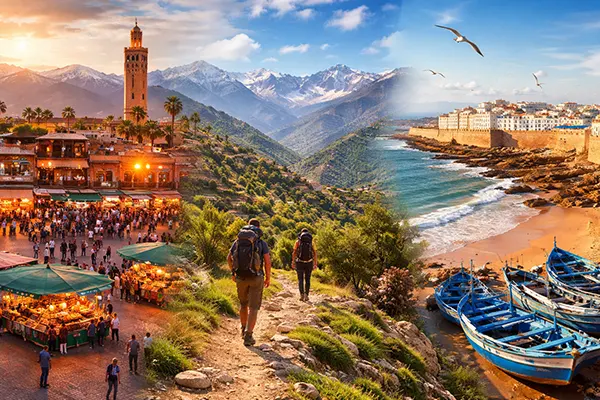
This route is for travellers who don’t want seven identical days. You’ll get the sensory overload of Marrakech, the quiet focus of mountain walking above Imlil, and a salty, wind-cooled finish on the Atlantic. The pacing is realistic: no overnight coach marathons, no “do everything before lunch” claims, and enough recovery time to actually enjoy what you’ve planned.
Days 1–2: Marrakech without rushing it
Give Marrakech two full days and you’ll stop treating it like a checklist. Base yourself inside the medina if you want to walk everywhere, or in Gueliz/Hivernage if you prefer wider streets and easier taxi pickups. Either way, plan your mornings for the medina’s lanes and your late afternoons for gardens and viewpoints, when the heat drops and the light gets kinder.
Keep day one flexible: arrive, orientate, then do one “anchor” sight (for example, a museum or a palace complex) and one slow wander through souks and food stalls. A simple rule works here: if you’re unsure about a price, ask politely, smile, and walk away; Marrakech has endless alternatives and you don’t need a confrontation to get a fair deal.
On day two, start thinking ahead to the mountains. The High Atlas gateway village of Imlil is roughly 65–70 km from Marrakech and usually takes around 1¾–2 hours by road depending on traffic and how you travel. Sort your cash, refill essentials (sun cream, blister plasters), and aim for an early night so day three starts smoothly.
A simple day-by-day rhythm for Marrakech
Day 1 (afternoon/evening): check in, walk to a main square for people-watching, then choose dinner where locals are actually eating. If you’re sensitive to noise, pick a riad room away from the courtyard; music and conversations carry at night.
Day 2 (morning): do one major visit early, before crowds peak. Then take a long lunch in shade and treat the afternoon as “slow exploration”: a garden, a short shopping loop, a coffee stop. You’ll enjoy the city more if you accept that you can’t see every corner in 48 hours.
Day 2 (evening): pack for trekking in a way that respects mountain reality: layers, not fashion. Marrakech can feel warm, but nights in the High Atlas can be sharply cooler, and weather changes fast. Put a warm layer and a light waterproof where you can reach them easily, not buried at the bottom.
Days 3–5: High Atlas trekking from Imlil
Leave Marrakech in the morning and head to Imlil, the best-known trailhead in the Toubkal area. You can go by private taxi/transfer or by shared taxi in stages; whichever you pick, confirm the route and price before you set off. Once in Imlil, your priorities are simple: meet your guide, check the weather window, and agree on a route that matches your fitness and the season.
In the Toubkal region, local authorities have required trekkers to use a guide since 2018, with checks reported on the approach routes. Even when enforcement feels variable, treating a licensed local guide as standard is the sensible move: it supports local livelihoods, avoids awkward checkpoint arguments, and makes the trek safer and more informative.
For “maximum variety” without burning out, plan two nights in the mountains: one night in a village/valley guesthouse and one closer to the higher trails (or in a refuge area, depending on your route). Day four can be your big walking day, and day five becomes a controlled descent and transfer back towards the city side, ready for the coast.
A realistic two-night trek plan near the Toubkal trails
Day 3 (Imlil to valley villages): treat this as an acclimatisation day. Walk a few hours through terraced fields and small settlements, stop often, and drink more than you think you need. In the afternoon, use the downtime for practical prep: adjust pack straps, tape hot spots on your feet, and agree early start times for the next day.
Day 4 (long mountain day): start early to avoid the hottest part of the day in summer and to keep a margin for weather. Your guide will adapt the route: some groups head towards the refuge approach and viewpoints, while others choose a quieter loop through passes and side valleys. Expect mixed terrain—stone paths, dusty sections, and occasional loose ground—so footwear with solid grip matters more than brand names.
Day 5 (descend and transfer): finish the trek by late morning, then return to Marrakech for a short reset before the Atlantic. If you’re prone to travel sickness, this is the day to sit near the front, keep water handy, and avoid heavy meals until you’re back on flatter ground.
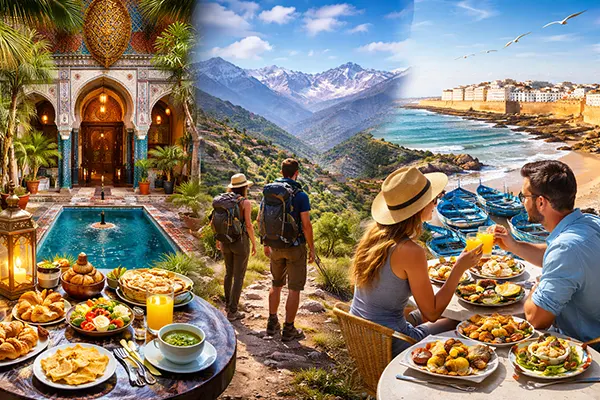
Days 6–7: Atlantic finish in Essaouira
After mountains, the Atlantic feels like a pressure release. Essaouira is a strong choice because it’s compact, walkable, and naturally cooler than inland Morocco. The bus journey from Marrakech to Essaouira is commonly around three hours, and tickets are typically in the ~100–140 MAD range depending on operator/service, with departures spread through the day.
Plan your first coastal afternoon for the medina walls and harbour. It’s a working port, so the photo opportunities are real, not staged: boats coming in, repairs happening, gulls circling, and smoke from grills when the day’s catch hits the coals. You’ll also notice the wind—often a steady trade wind that defines the city’s feel for much of the year.
On day seven, choose your “ocean version” based on conditions: a beach walk and café-hopping if the wind is up, or a longer sand stretch and a swim if you’ve hit a calmer day. Keep the return to Marrakech (or onward travel) straightforward: pack early, buy tickets ahead when possible, and leave slack time for traffic on the approach to the city.
Making the Atlantic work for you: wind, timing, and comfort
If you travel between late spring and early autumn, expect wind to be part of the deal in Essaouira. That’s great if you like kitesurf culture and brisk walks, less great if you imagined a still, hot beach day. Bring a light windproof layer and you’ll suddenly enjoy the city a lot more.
Build in one “soft slot” each day on the coast: a long lunch, a hammam, or simply an hour watching the surf from behind a wall. Essaouira rewards unplanned time. It’s the opposite of Marrakech’s intensity, and it works best when you stop forcing it to behave like a resort.
Finally, treat the coast as your buffer before flying home. Salt air, long walks, early nights—these are not filler. They’re what make the whole seven-day arc feel coherent: city energy, mountain focus, then a clean, quiet finish by the ocean.